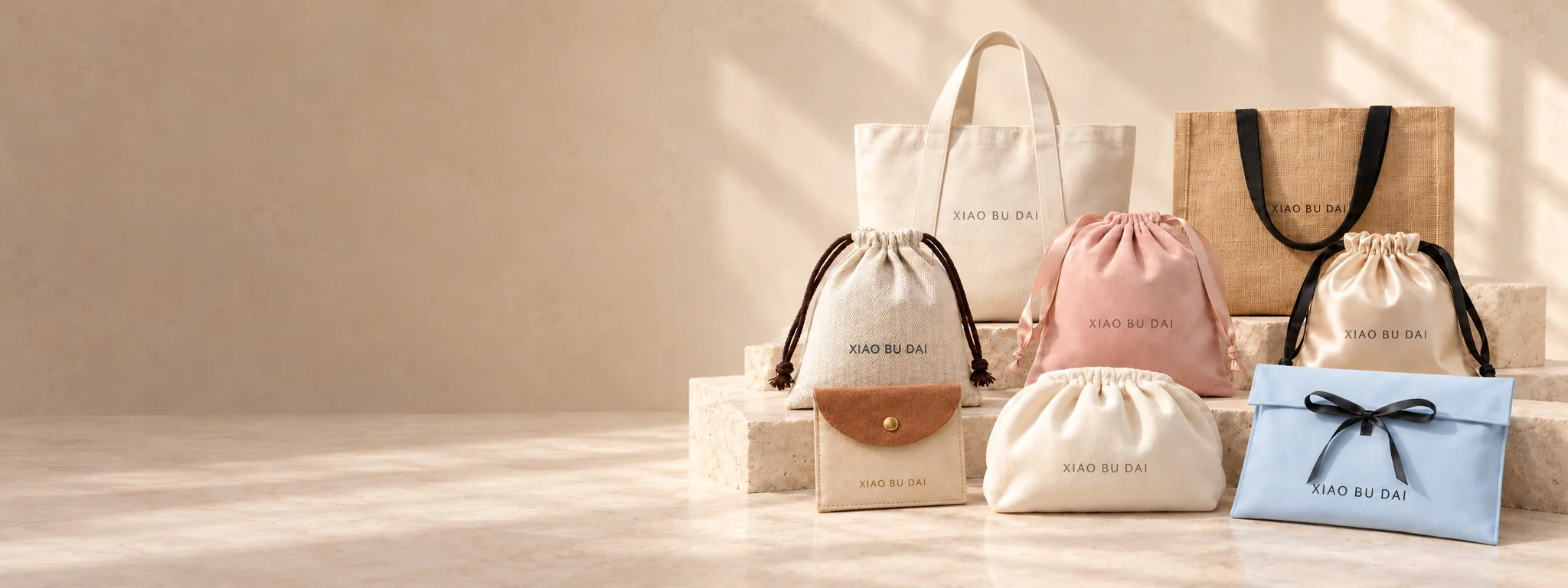
Custom fabric bags & pouches
Custom fabric bags, cut to your brief.
Pouches, dust bags, totes and cosmetic bags for jewelry, beauty, hair, eyewear and retail programmes. Send the size, the fabric and the logo file — a construction proposal and a tiered quote come back.
The catalogue
Nine formats we build every week.
Pick a starting format, then customise material, size, colour, closure and branding. Every family below is a construction built to order — not a stock item with a label added.
Minimum order runs from 200 pieces per colourway, on an 8,490 m² floor with eight production lines.
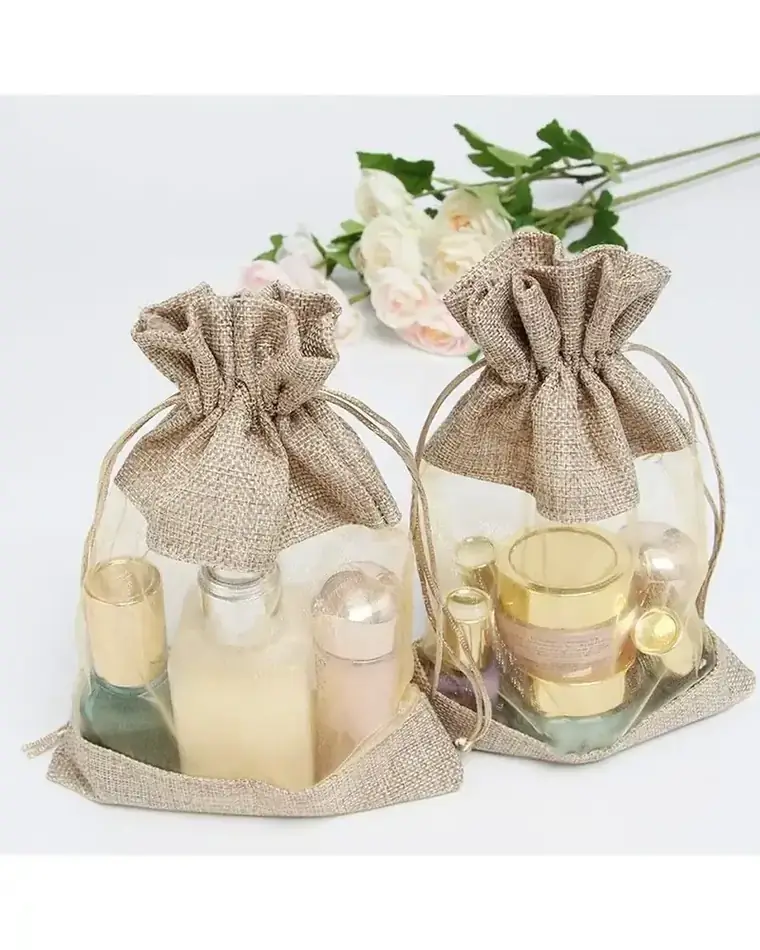
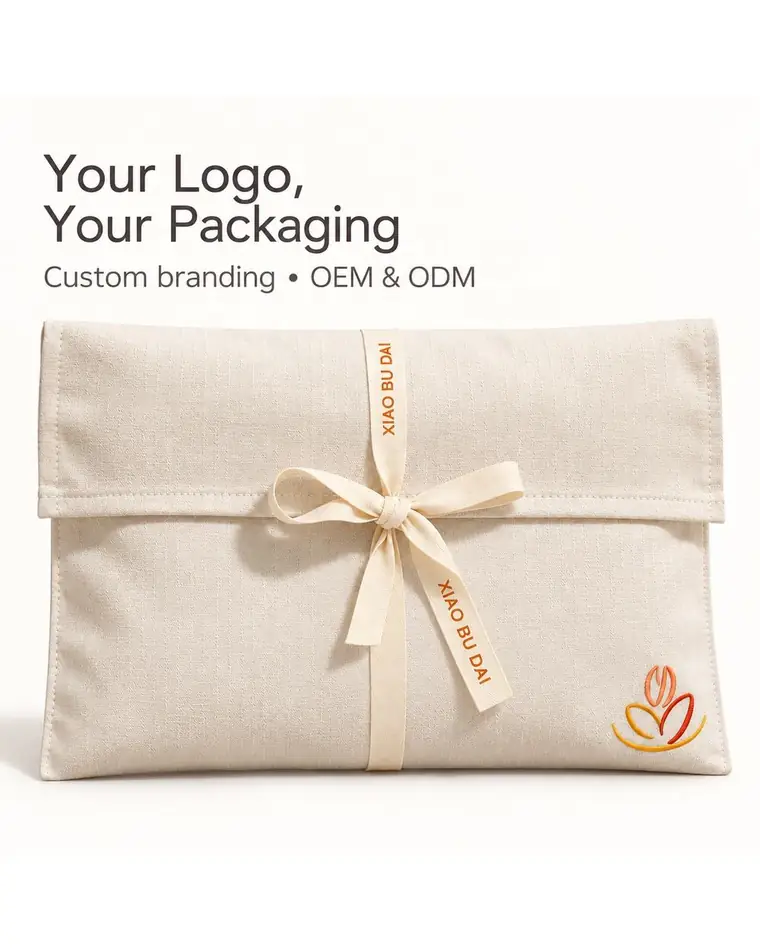
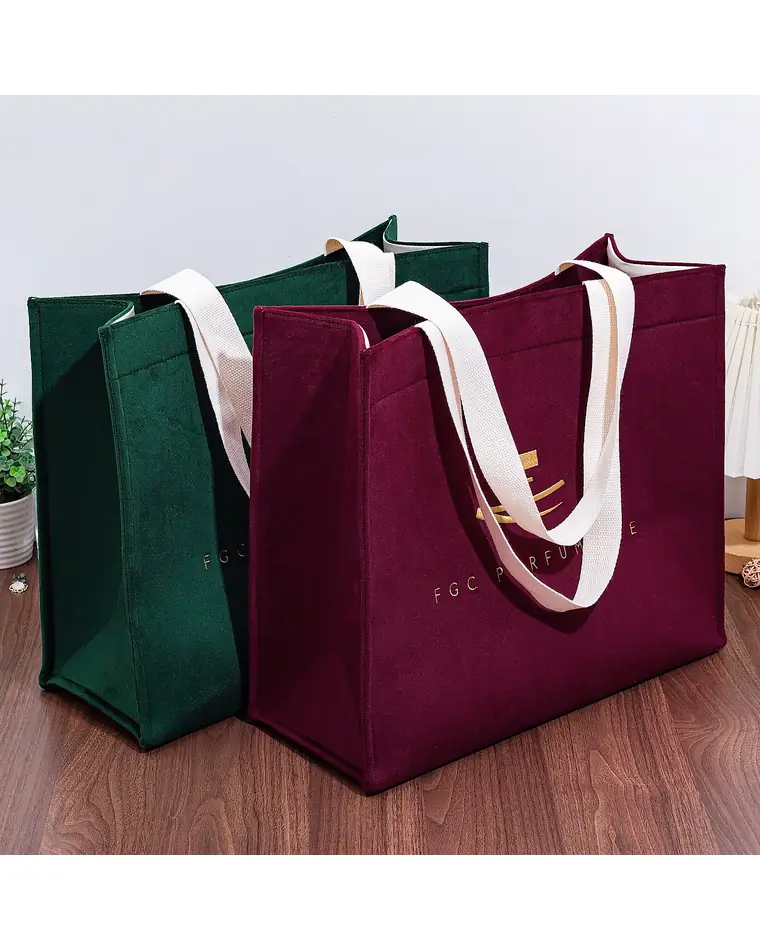
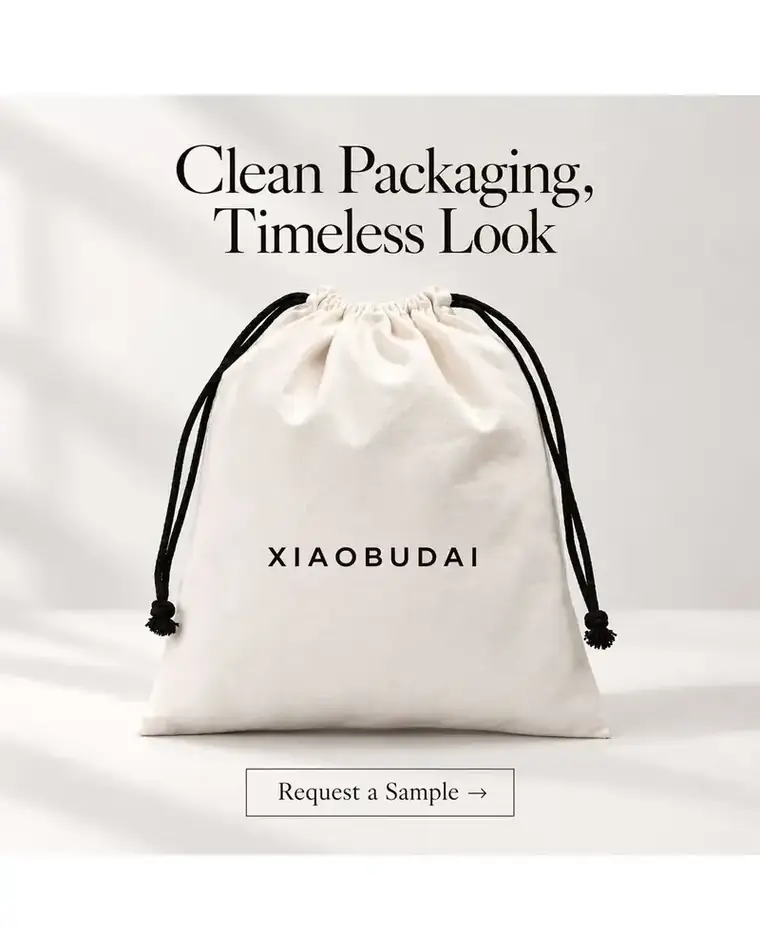
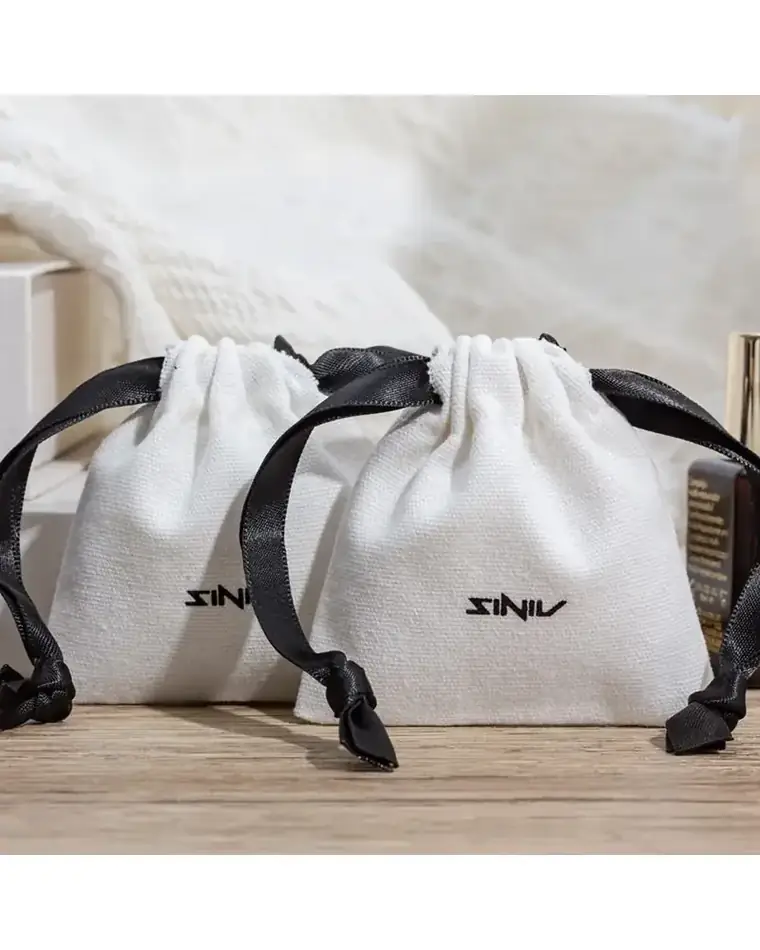
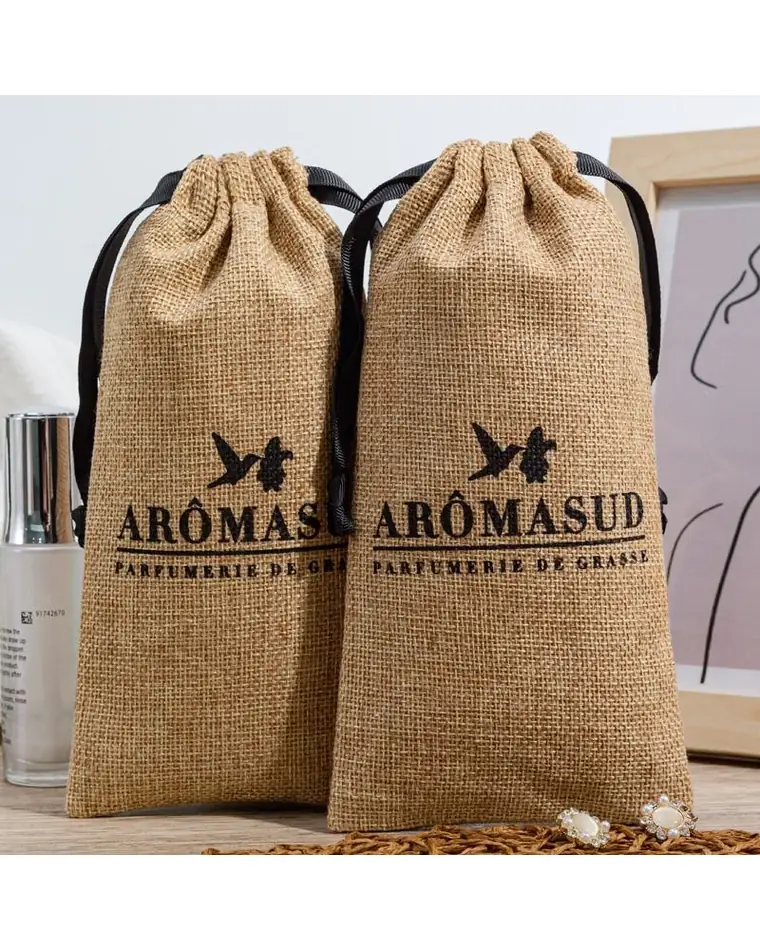
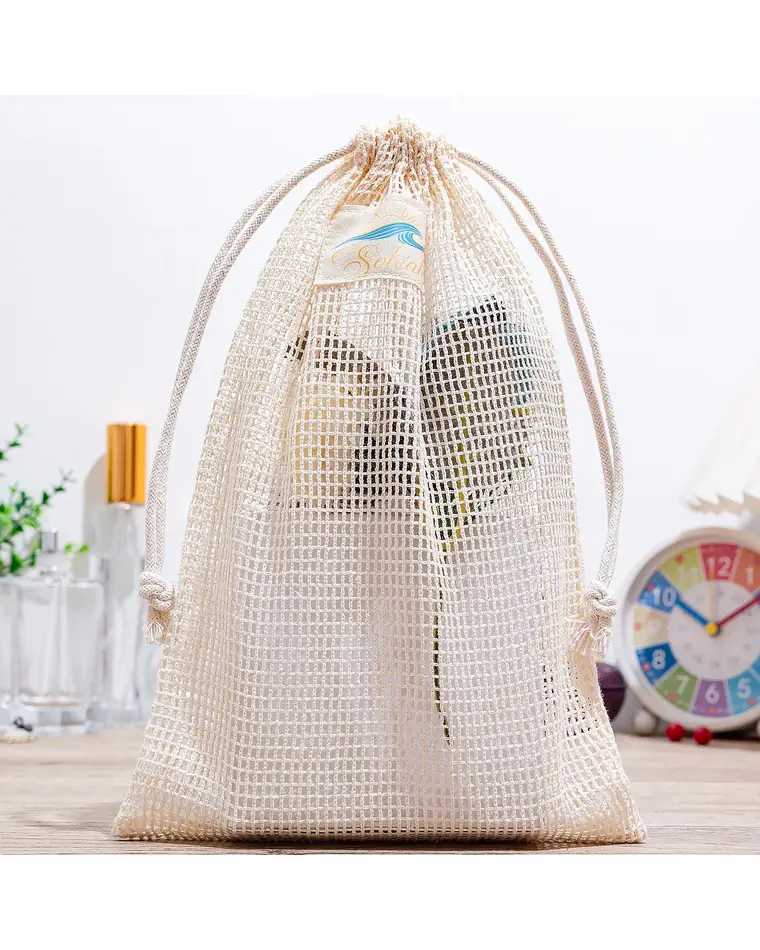
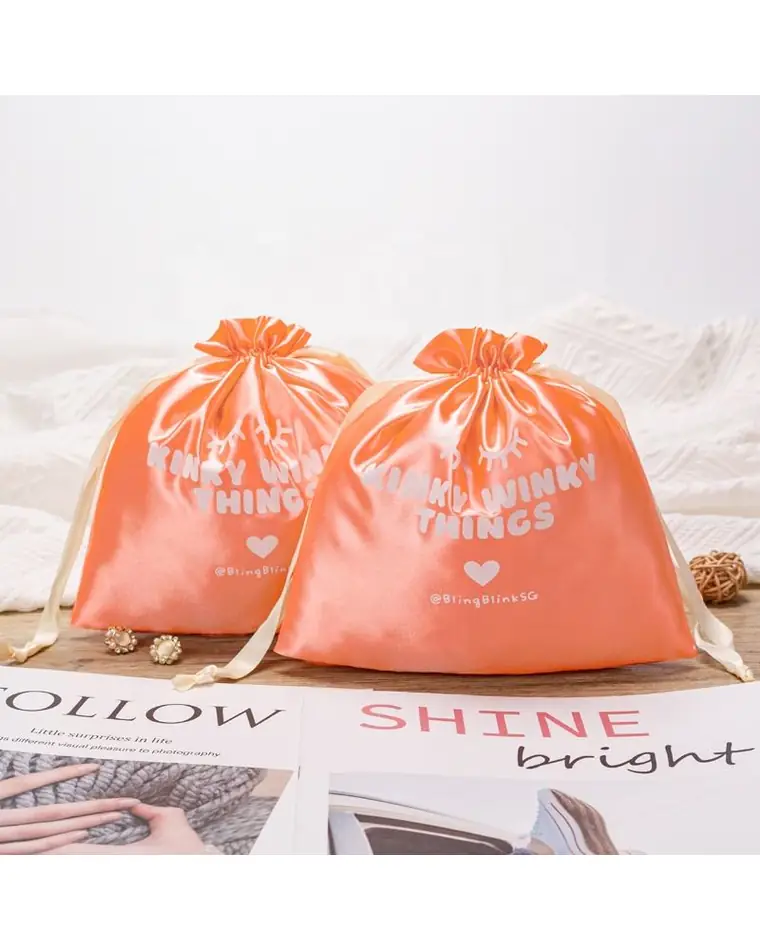
Also in production
- Velvet drawstring pouches
- Satin & silk-look pouches
- Envelope & flap pouches
- PU leather pouches
- Non-woven bags
- Polyester bags
- Rigid gift boxes
- Cotton drawstring bags
These formats are quoted on request — a clean product photograph for each is still being shot. The full live range sits on our storefront.
Materials
Same pouch. A different feel.
The fabric decides what the pouch protects, how it photographs and which logo methods are even open to you. Match it to the way a customer will handle the product, not to how premium the name sounds.
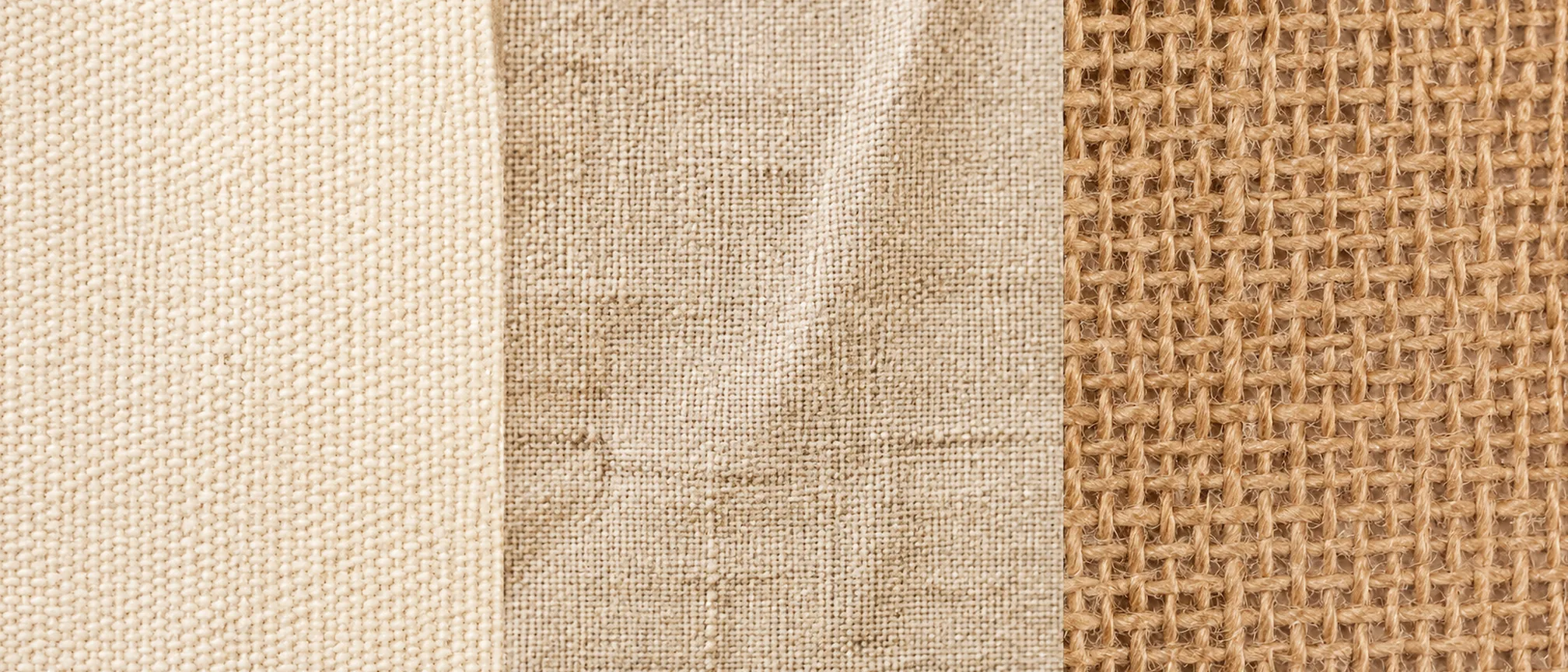
Cotton, linen and jute run in regular production. Velvet, satin and microfiber are still available on request — quoted per project.
Cotton, twill & canvas
Best for: Retail, promotional, reusable bagsCarries load and holds structure, and takes screen print and embroidery cleanly. This is the range where branding is most visible — confirm the usable print area before finalising artwork.
Linen, jute & burlap
Best for: Bakery, gifting, natural-look retailVisible weave and an understated natural finish. Embroidery and woven labels work with that texture better than fine screen printing, which breaks up on an open weave.
Your logo, applied
Six ways to put your brand on it.
The fabric decides which decoration methods are open to you. Pick the one that matches your artwork, not the one that sounds most expensive.
Send the file with the fabric you have in mind and the recommendation comes back with a proposed construction and a tiered quotation.
Silk screen
Best on: Cotton · Canvas · Twill · Velvet
Spot-colour printing with solid, opaque coverage. The lowest unit cost once the screens exist, which makes it the default for larger runs in one or two colours.
Foil / hot stamping
Best on: Velvet · Suede · PU leather
Gold, silver or coloured foil pressed into the surface. Very fine line work can sink into a deep pile, so approve the smallest element of your mark on a stamped sample rather than on screen.
Debossing & embossing
Best on: Microfiber suede · PU leather
The mark is pressed in with no ink and no foil, so it reads only as texture and shadow. Understated by nature — the wrong call if the logo has to be legible at a distance.
Embroidery
Best on: Cotton canvas · Linen · Heavy twill
Stitched thread gives the logo physical relief you can feel through the fabric, and it survives washing better than any print. Thin typefaces close up as the stitches pull together.
Heat transfer
Best on: Satin · Microfiber · Coated fabrics
Handles gradients, multi-colour marks and photographic artwork that screen printing cannot reproduce, with no screen set-up per colour.
Woven labels & trims
Best on: Any fabric
Woven brand labels, printed hang tags, satin ribbons, custom zipper pulls and branded cartons. This is where a pouch stops looking like stock packaging.
Factory direct
Keep the decisions close to production.
Custom pouches fail in the gap between the brief and the sewing floor. Keeping development, sampling and inspection on one site in Shenzhen is the whole argument for going direct.
Figures below are published on our public supplier profile, not marketing estimates.
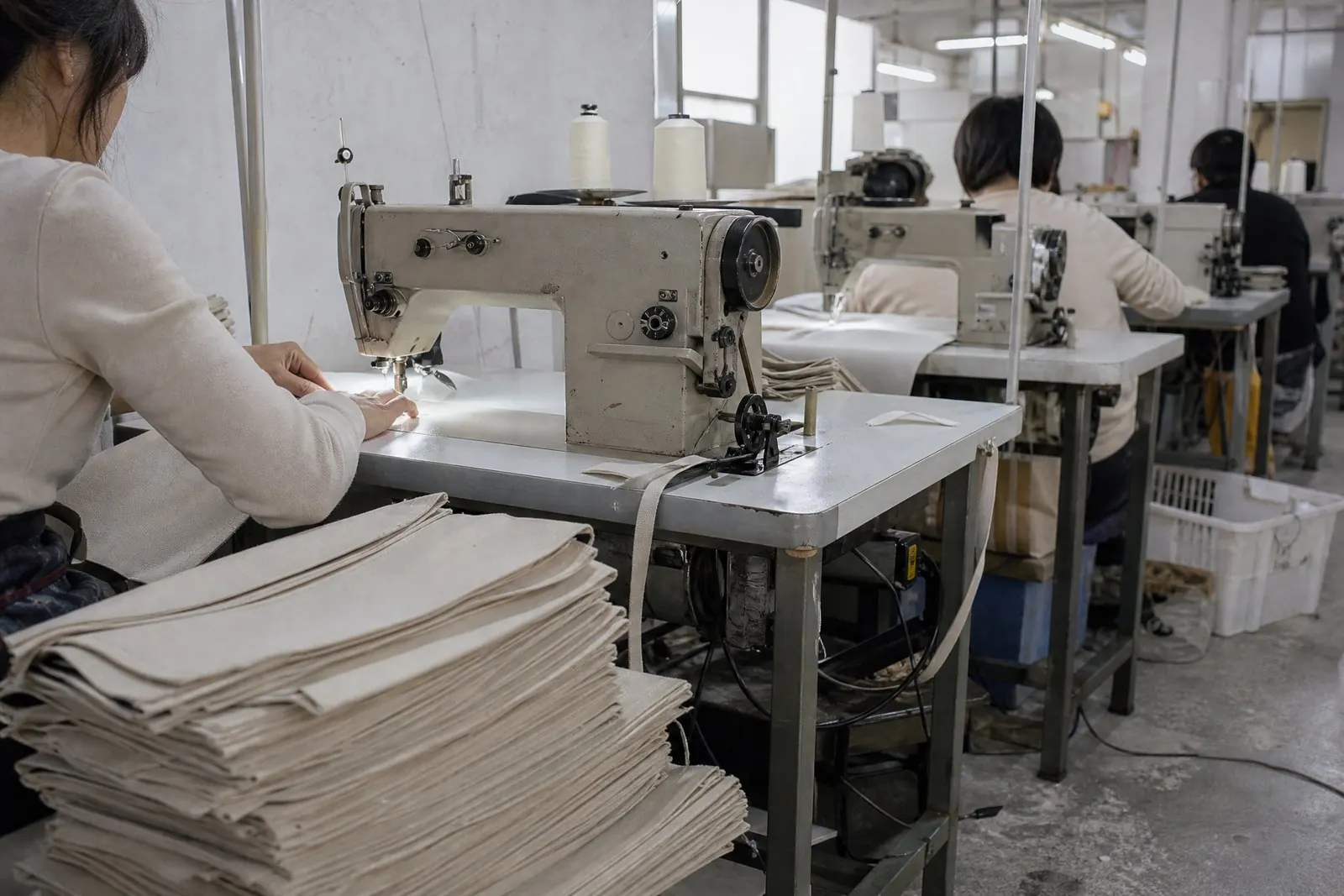 Sewing line · cut panels staged at the head of the run
OEM / ODM development
Construction, size, fabric, colour and logo method are developed to your brief rather than selected from a fixed catalogue. 3D design support is available for a format that does not exist yet.
Sample before bulk
A physical sample is approved before a production order is released. From that point, finished units are checked against the approved sample rather than against artwork on a screen.
Raw material traceability
Incoming fabric lots are identified and logged, then checked for weight, colour and visible defects before anything is cut — the cheapest point to catch a wrong fabric or an off colour.
Finished product inspection
Eight QA/QC inspectors cover the lines. Finished units are inspected before packing, against the approved pre-production sample, not a sample pulled from the lot at the end.
8,490
m² production floor
192
Staff on site
08
Production lines
200 pcs
Pieces minimum order
How it works
From brief to bulk order.
Five stages, each with something you approve before the next one starts. Nothing moves to a full run on the strength of a screen mock-up.
01
Inquiry
Share the format, dimensions, material, quantity, artwork and target delivery date. No finished artwork yet? A reference photo and your product dimensions are enough to start.
02
Mock-up & quote
You get a proposed construction, a decoration method suited to the fabric you chose, and a tiered quotation — so options can be compared before anything is spent on sampling.
03
Sample approval
Material, finished dimensions, construction and logo placement are signed off on a physical sample. Everything after this point is checked against that sample.
04
Production
Fabric lots are logged before cutting, print position and stitching are checked as the order moves through the eight lines, with photo updates as it goes.
05
Inspection & shipping
Finished units are inspected against the approved sample before packing. Packing method, carton marks and the documents your route needs are agreed before the shipment leaves.
Before sampling
Questions that make the quote faster.
Clear specifications shorten every stage after them. These are the six that change a quotation most.
Start your project
Turn your brief into a factory quote.
Tell us the product, material, dimensions, quantity and logo finish. Those details are what construction, sampling and pricing are discussed from — a shorter message just costs a round trip.
- A construction proposal and a tiered quote, not a price list
- Sample approved before any bulk production starts
- Artwork reviewed for the fabric you have chosen
- NDA signed on request, files kept confidential